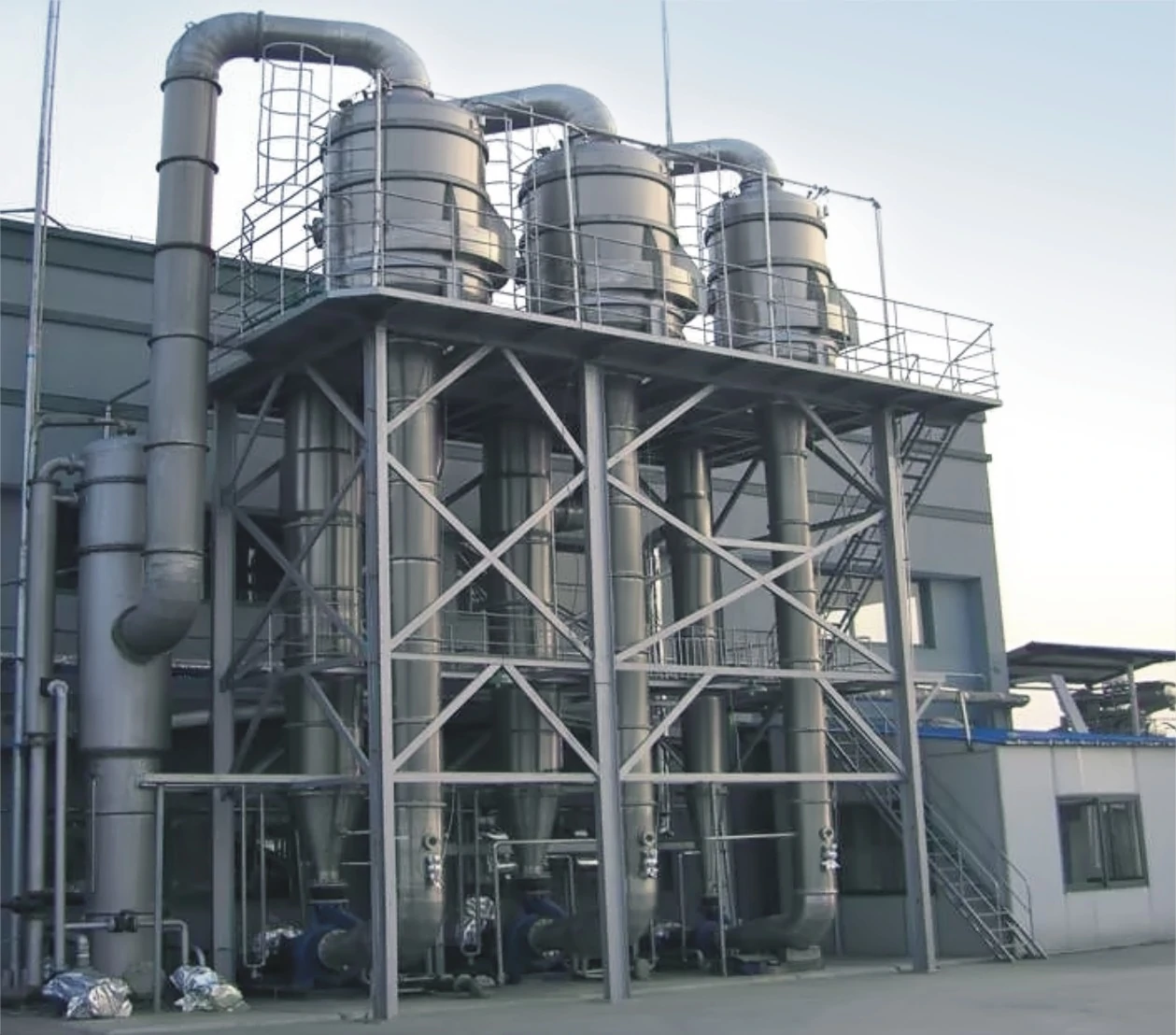
Triple-effect Evaporator

Triple-effect Evaporator

Scope of Application:

Suitable for use in pharmaceuticals, glucose, starch, chemicals, xylose, citric acid, ammonium sulfate, biochemical engineering, environmental engineering, and waste liquid recovery and treatment.


Share:

  • Product Description
  • Specification
  • Related Application
  • FAQ

Product Description

Equipment Features:

A. Consists of first-, second-, and third-effect separators; first-, second-, and third-effect evaporators; a preheater; a condenser; and a thermal compression pump.

B. Low evaporation consumption: 1 kg of steam can evaporate 3.2 kg of water.

C. Low evaporation temperature: Part of the secondary steam is re-injected into the first-effect heater via a jet-type thermal compression pump, ensuring full utilization of heat and resulting in a relatively low evaporation temperature.

D. High concentration ratio: The falling film evaporation process facilitates the evaporation of high-viscosity feed solutions, minimizes scaling, and achieves a short concentration time with a concentration ratio of up to 1:5.

E. This equipment supports fully automated production and intelligent system management, meeting GMP standards.


Specification

Evaporation Capacity:

1,000–50,000 kg/h[1] Rising Film and Falling Film

(1) Rising Film Evaporator: The feed enters the evaporator from the bottom and is carried upward along the tubes by two streams of steam. Falling Film Evaporator: The feed enters the evaporator from the top and flows downward along the tube walls under the force of gravity.

(2) Regardless of the type, all evaporators primarily consist of three components: the heater, the main body (for liquid-gas heat exchange), and the condenser. Different manufacturers may produce equipment with varying shapes and performance characteristics; however, the core components remain the three mentioned above. Additionally, there are auxiliary control systems and ancillary equipment, but the main components are the three just described.

(3) The term “film” in rising film and falling film refers to the fact that, during operation, the feed liquid flows along the heating tube wall in a film-like manner, which provides optimal heat transfer efficiency.


We'd love to hear from you.

Please leave a message, we will get in touch with you as soon as possible!

  • *We respect your privacy. When you submit your contact information, we agree to only contact you in accordance with our Privacy Policy.

Contact Us

Inquire